
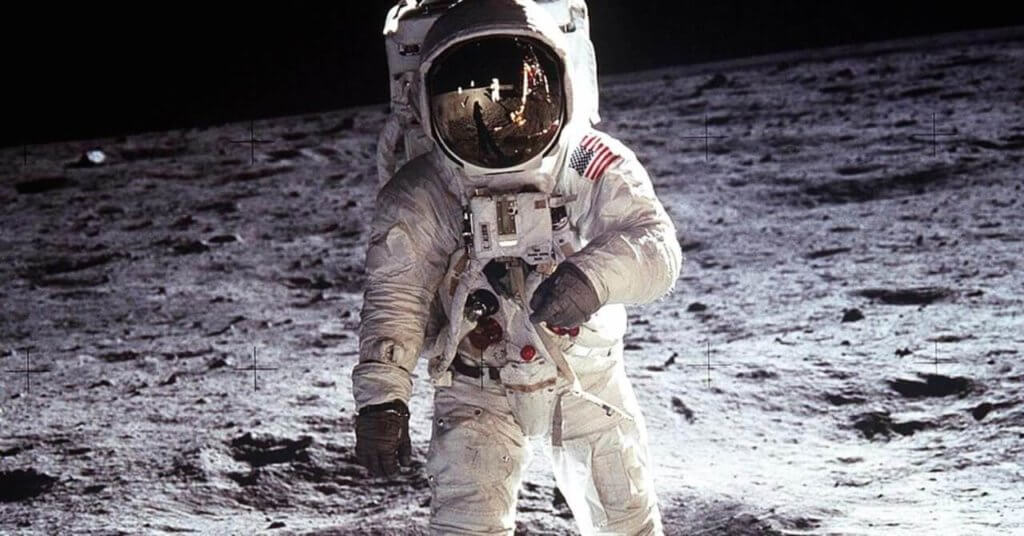
Did you know that most astronauts experience moderate to severe back pain while they’re in outer-space? The pain usually starts a day or two after they take off, then begins to settle at the end of the first week as they start to get used to their new environment. I thought some of you might like to know why this happens, and how this knowledge can help you to manage your own back pain problems.
The intervertebral disc is a very sensitive, and complex spinal structure that is a common source of back and neck pain. There are 23 discs in the spinal column sandwiched between the vertebral bones. They are composed of two parts – the annulus, and the nucleus pulposus. The outer structure (the annulus) is composed of cross-hatching ligaments which hold the nucleus in, and also helps to hold the spinal bones together. It is packed with free nerve endings that produce “pain messages” when over-stretched or compressed. The inner part of the disc is made of a material which some people liken to the inside of a jelly doughnut. This comparison though does not take into account the significant pressure the nucleus is under. This tremendous pressure makes the disc function like a shock absorber as it bears the weight of the skeleton. The nucleus is aneural (without nerves) which means that you could hit it with a hammer or torch it and no pain messages would be produced.
 Gravity never takes a break. Our discs are always being compressed. 24/7. We do get a break from it though. Each night when we lie down to sleep, the pressure in our discs decreases to about 25-75% of what the pressure is when we’re standing. While lying, due to the lack of compression, the inner part of the disc takes on water like a sponge, and the space between each of the spinal bones (vertebral bodies) increases, and we actually become taller. When the morning comes, and as you go about your business during the day, the excess water squishes back out of the disc. Just to prove a point here, have you ever noticed that when you sit in your car to go home after a full day at work, the first thing you do is adjust your rear-view mirror down a bit?
When astronauts are in orbit they are in a state of free-fall which effectively cancels out the effect of gravity (more about that here) . Without the compressive load of the body squishing out the excess water in the disc, the discs of the lower back become very pressurized. The overstretched fibers of the annulus cause astronauts to feel significant lower back pain and stiffness even if the disc itself is healthy. But what if the disc has a minor tear in it?
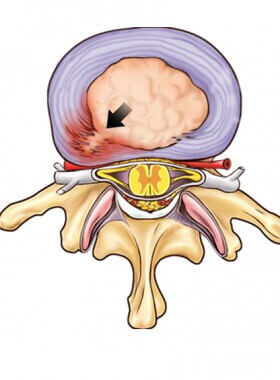
One of the most common problems among 20-45 year-olds is disc herniation. This comes about due to minor tearing between the layers of the outer part of the disc. Once torn, the inner part of the disc – the pressurized part – causes increased tension on these torn tissues which causes even more tearing. This condition is called a disc bulge or herniation.
Using disc pressure to our advantage. Most herniations are on the back side of the disc. (see picture above) Even without an MRI, a well-trained physical therapist can figure this out with ease. Here’s how: The nucleus moves like a piece of soap between two wet hands. Moving your hands together in the front causes the soap to move to the back of your hands. And squishing your hands together in the back causes the soap to move forward. So it is with the disc: People with bulging in the back part of the disc, like this picture, frequently report that their back pain is aggravated by prolonged sitting, and sustained or repeated bending. These movements increase pain in the back because bending activities compress the front side of the disc which then causes an increase in pressure on the pain-sensitive fibers of the back side of the disc.

Fortunately, many people can begin to find some relief by moving in the opposite direction. This compresses the back side of the disc, and can move the nucleus forward again. There are many varieties of herniated discs, and some are harder to treat than others, but this exercise, and the avoidance of forward bending and slouching for a few days can be a great place to start.
Now, back to our astronauts. Nearly all astronauts, on returning to earth have another bout of significant back pain. It’s not hard to imagine why, is it? Remember, with no gravity, their discs expand, and during their time in outer space, they’ve adapted to this . But once their over-hydrated discs become compressed again by the force of gravity, the tension on the pain-sensitive annulus makes moving around very painful for a week or so until all the extra water is squished out again. This is obviously not the most glamorous part of being an astronaut.
The glamorous part of being a Physical Therapist: PT’s are experts at helping people recover from episodes of back pain and sciatica. Our job is to help you make good decisions about the care of your body. If you’ve given it your best shot, and are still having pain, I’m sure I can help you figure out what’s keeping you from making progress. Most conditions begin responding in the first or second session. You’ll soon be ready for anything. Well, except maybe space travel 🙂
To learn more about the treatment of back pain and herniated discs, click here or go to https://physicaltherapyeugene.com
